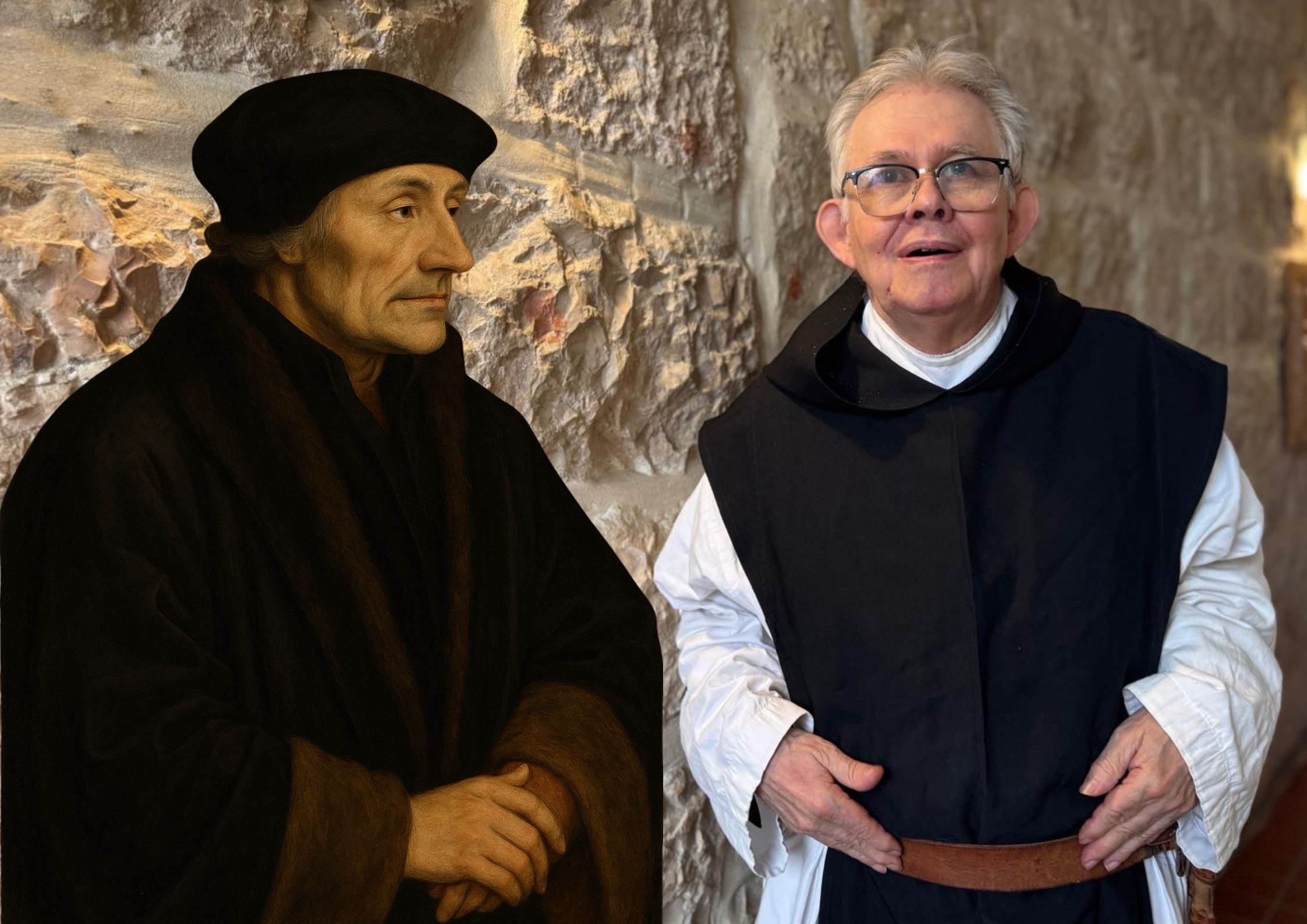
The École biblique et archéologique française de Jérusalem invited the public to another “ÉBAF Thursday” on November 20, at 6:00 p.m. The session was led by Brother Marie-Augustin Tavardon, ocso, professor of New Testament at the ÉBAF.
A renowned specialist in New Testament exegesis and a connoisseur of the history of textual criticism, Brother M.-Augustin took us on a journey in the footsteps of Erasmus, Theodore Beza, and Johann Jakob Wettstein.
How, between humanism, philology, and theology, did these authors contribute to the development of modern criticism in the study of the New Testament? Brother Marie-Augustin had some suggestions.
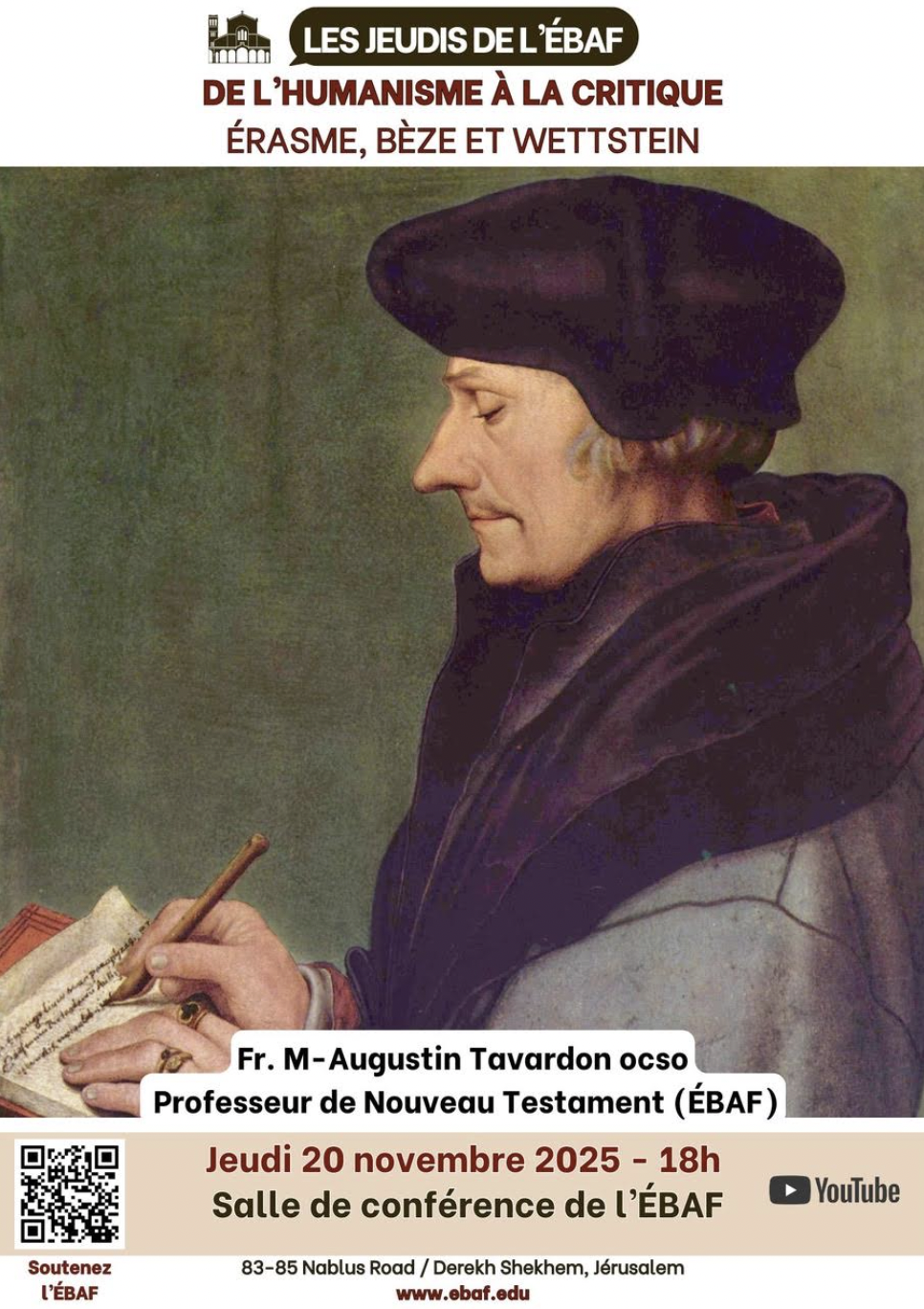
Following in their footsteps, we attempted to understand the mechanisms and stages that, through spiritual, intellectual, and sometimes polemical issues, accompanied these developments: how did the editing of the text ultimately transform the reception of the Scriptures? What dialogues—or tensions—between faith, scholarship, and humanism emerged over the centuries? And what lessons can we learn today from these three essential milestones to better understand contemporary work in biblical scholarship?