Biographical events
1855 – 1938
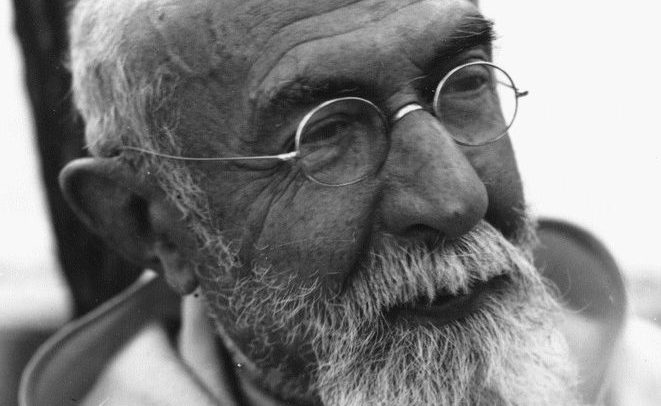
Albert Lagrange was born on 7 March 1855 in Bourg-en-Bresse, in the Ain department of France. He obtained his doctorate in law before entering the Dominicans of the province of Toulouse, where he received the name Brother Marie-Joseph. That was in 1879, and in 1883 Marie-Joseph was ordained a priest.
Founding the École in Jerusalem
As professor of Church history and Holy Scripture, he was sent to the University of Vienna (Austria) to improve his knowledge of Oriental languages. There, on 5 February 1889, he received the order to leave for Jerusalem. He immediately sketched out a programme and, on 15 November 1890, in a former Turkish slaughterhouse where the rings for tethering animals still hung on the walls, he opened what he called the École Pratique d’Études Bibliques (Practical School of Biblical Studies).
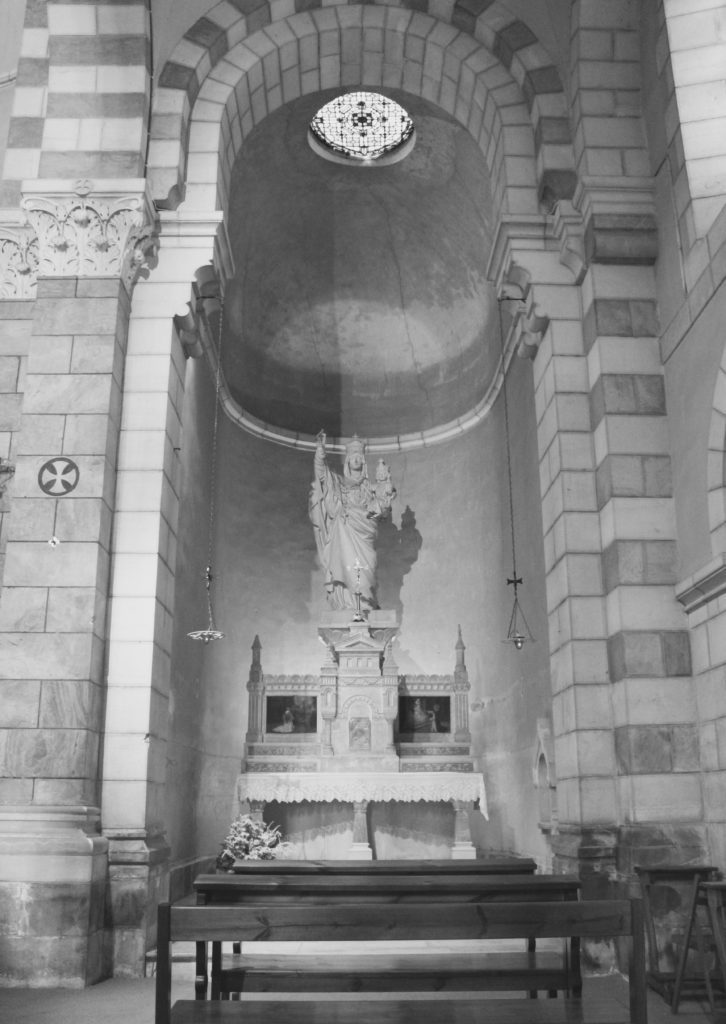
Father Lagrange was not idle: he founded the École biblique in 1890, the Revue Biblique in 1892 and the Études bibliques series in 1898, and he developed archaeological research. All these “creations” became reference points that put the École in contact with scholars all over the world.
The Modernist crisis
The beginnings of the difficulties Father Lagrange encountered in what would later be called the Modernist crisis can be dated to his lectures on the “historical method”, given in Toulouse in 1902.
Father Lagrange adhered to Pope Leo XIII’s encyclical Providentissimus Deus, which called for research to resolve the difficulties raised by the rationalist analysis of the Bible through an exegesis that would be at once traditional and progressive. But Lagrange’s scientific method was repugnant to some, and although he worked hard to refute those who questioned the essential data of the Christian faith, he was censured and, in 1912, had to leave Jerusalem for a year.
Throughout this period of suspicion, which lasted almost until the 1930s and led him, among other things, to give up publishing his commentary on Genesis and to accept a year’s exile in 1912, Father Lagrange always remained absolutely faithful to the Church.
In the aftermath of the encyclical Divino Afflante Spiritu (1943) and the Second World War, Father Lagrange’s work and character came to be recognized as exemplary.
His final rest in Jerusalem
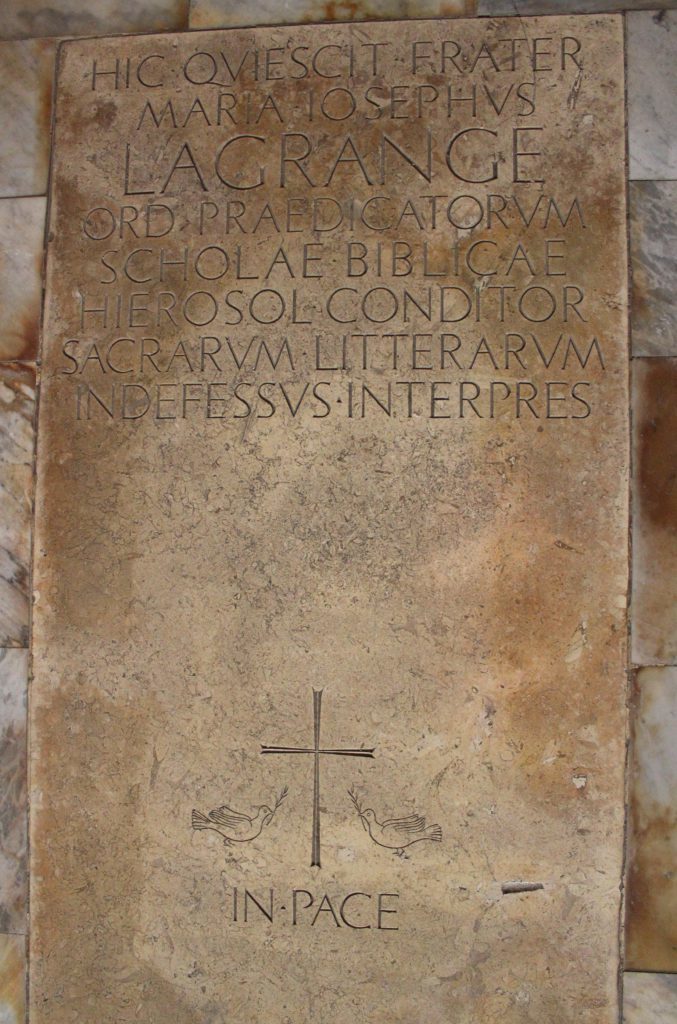
Marie-Joseph Lagrange died on 10 March 1938, aged 83, in Saint-Maximin, where poor health had forced him to return in 1935. His remains were buried in the conventual cemetery and then transported to Jerusalem and buried in the Basilica of St. Stephen, where they now rest.
His body was translated to the choir of St. Stephen’s Basilica in November 1967. His cause for beatification was opened in 1988, and it is hoped that a recognized miracle will one day see him raised to the altars.
Your gift helps carry on the work Father Lagrange began in Jerusalem in 1890.