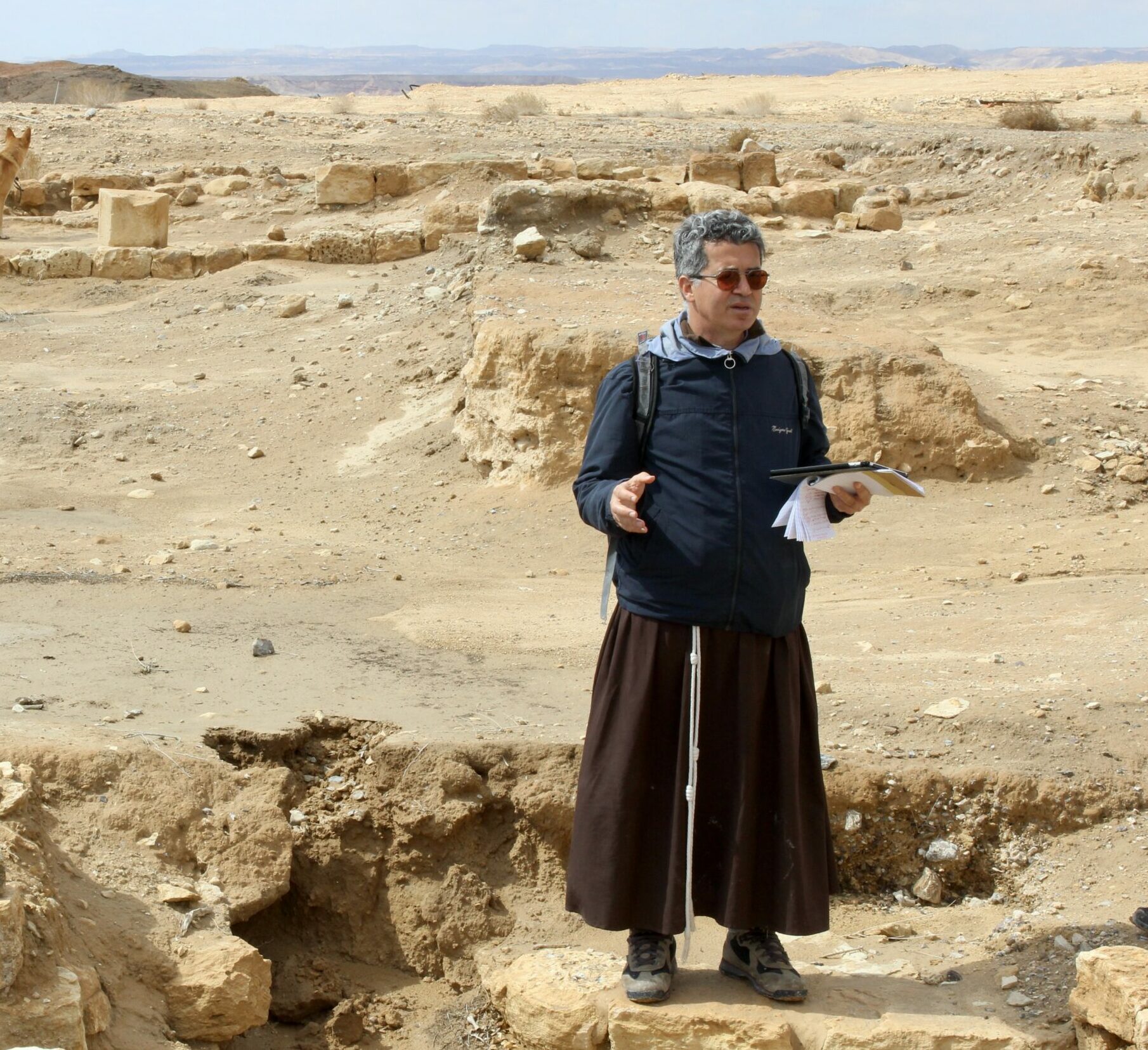
From 5 to 9 October 2026, the DEI will bring together researchers in Jerusalem and Bethlehem to present their recent work in the Holy Land. Brother Yunus Demirci, the ÉBAF’s Archaeology Coordinator, will speak on behalf of the École Biblique et Archéologique Française de Jérusalem.
For more than a century, the École Biblique et Archéologique Française de Jérusalem and the German Protestant Institute of Archaeology in the Holy Land (Deutsches Evangelisches Institut für Altertumswissenschaft des Heiligen Landes, DEI) have shared a commitment to the scholarly study of the region’s history and cultures through close engagement with the archaeological evidence. The academic and friendly ties between our institutions contribute to the exchanges that make Jerusalem a unique centre for international archaeological research.
From 5 to 9 October 2026, as part of the conference ‘New Archaeological Research in the Holy Land’, the DEI will offer a series of lectures, archaeological visits and gatherings in Jerusalem and Bethlehem devoted to the latest research being conducted on both sides of the Jordan.
On Tuesday 6 October at 1 p.m., Brother Yunus Demirci, OFM Cap., the ÉBAF’s Archaeology Coordinator, will deliver a paper entitled ‘Heritage, Continuity, and Renewal: The École Biblique’s Evolving Contribution to Near Eastern Archaeology’.
Since its foundation in 1890, the École Biblique et Archéologique Française de Jérusalem has played a pioneering role in the development of archaeological research in the Holy Land and, more broadly, throughout the Near East. Faithful to the vision of Father Lagrange, who encouraged scholars to read the biblical text in the light of its archaeological context, the École began conducting explorations throughout the Levant at an early stage. The work of Fathers Vincent, Abel, Jaussen, Savignac and de Vaux established an enduring scholarly tradition. Continuing in their footsteps, Father Jean-Baptiste Humbert carried forward the legacy of his predecessors for more than half a century, reaffirming the École’s commitment to contemporary research.
Today, through the use of cutting-edge technologies and collaboration with new research teams, the École continues to publish the results of earlier excavations, re-examines its archaeological material using modern analytical methods, and develops new interdisciplinary programmes. These programmes highlight the ways in which the Bible and history illuminate one another, while also engaging with the latest developments in research.
Are you interested in the archaeology of the Holy Land? View the programme and register.